
Editor’s Pick


cnyanaho@gmail.com
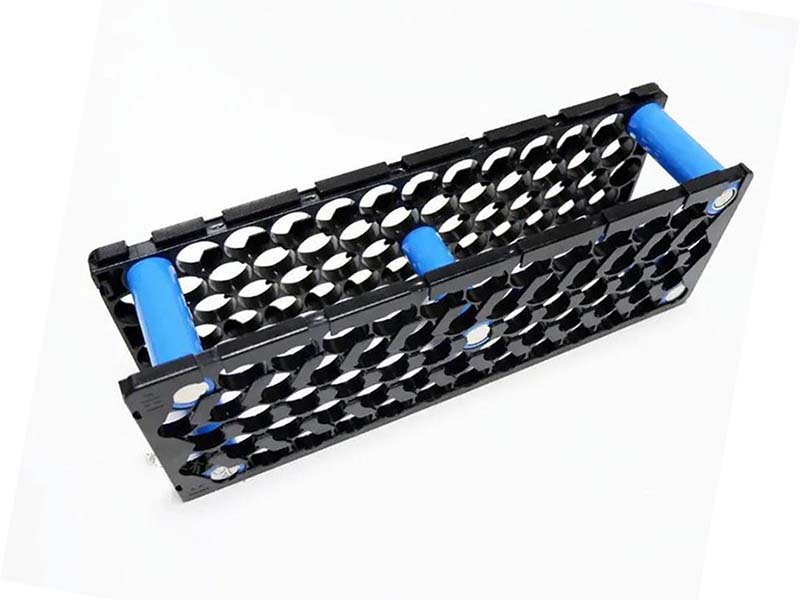
Lithium batteries come in various shapes, from cylindrical to square. The cylindrical types, like 18650, 20700, 21700, and others, are commonly found in power and energy storage applications. When these batteries are assembled into packs, a battery cell holder is often included. But why is this addition necessary? Let’s explore.
Isolation and Insulation
Each battery cell must be insulated from the others to prevent short circuits. The cell holder serves as a crucial element for isolation and insulation during pack assembly. Without it, cells rely solely on PVC film for isolation, which poses a risk. Any damage to the PVC, caused by drops or vibrations, could lead to short circuits between cells, potentially resulting in explosions or fires.
Enhanced Heat Dissipation
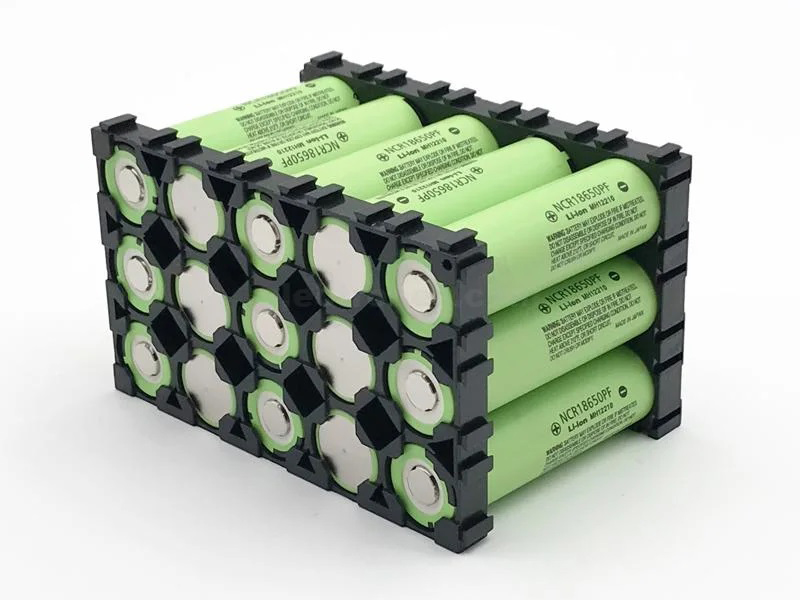
Another benefit of adding a battery cell holder is improved heat dissipation due to the increased gap between cells. Typically, the bracket creates around a 1mm gap, preventing cells from being too close to each other. This larger gap promotes better heat dissipation, crucial for maintaining battery performance and longevity.
Structural Stability
In cases where lithium battery packs contain numerous cells, such as in high-voltage or high-capacity configurations, the addition of a cell holder provides essential structural stability. For instance, a 72V26Ah pack utilizing 18650 cells in a 20-series, 10-parallel configuration comprises 200 cells, resulting in significant volume and weight. Without a holder, the pack’s structure may not withstand frequent vibrations, leading to potential damage over time. However, with a cell bracket, the internal structure becomes more robust, mitigating risks and ensuring long-term reliability, particularly in applications like instruments, robots, AGVs, and electric vehicles.
In summary, the inclusion of a cell holder in lithium battery packs serves multiple crucial functions, from insulation and heat dissipation to structural stability. It’s a small yet significant component that contributes to the overall safety and performance of battery systems, particularly in demanding and high-end applications.